
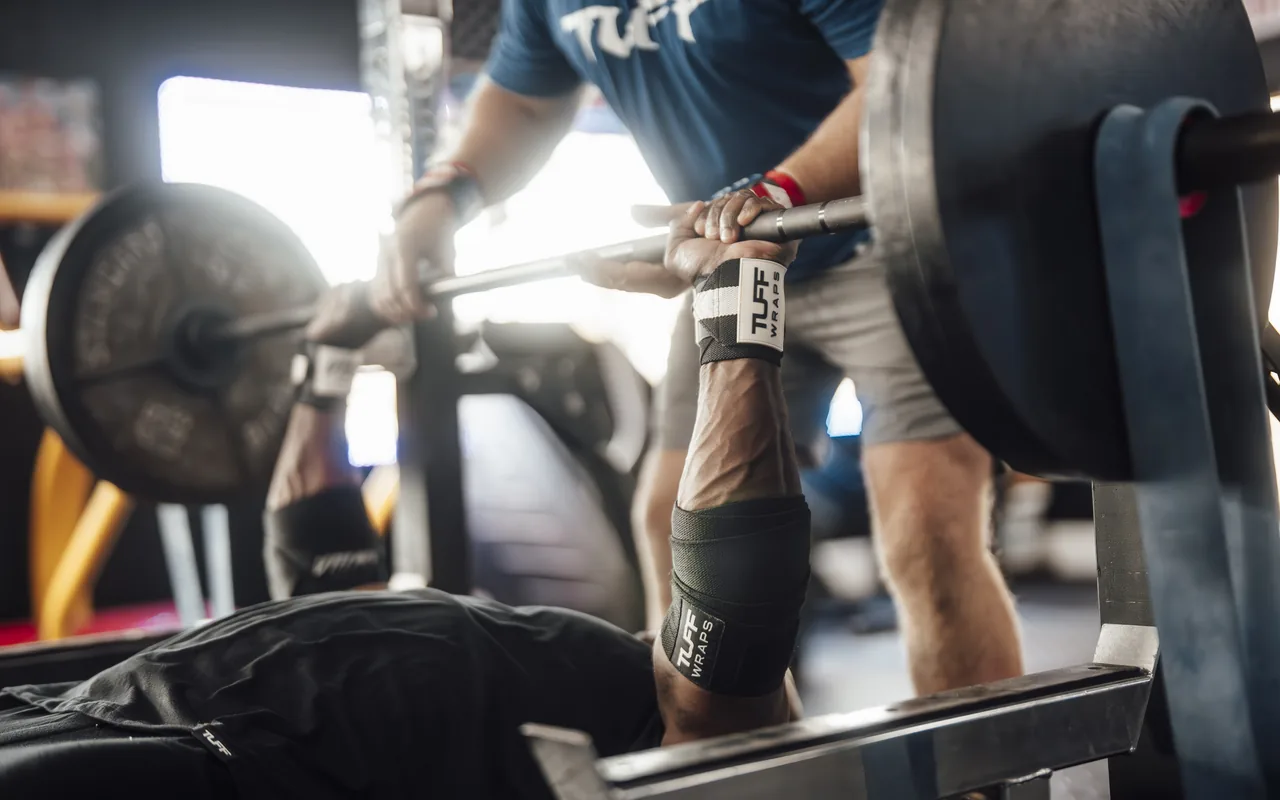
In practice, I have heard the same story from many lifters: pressing felt fine for years, then heavier bench sessions began leaving a sharp pinch or lingering ache around the wrist. They stretch it, ice it, or assume the joint is simply weak.
Wrist discomfort has many possible causes, and no article can diagnose yours. But one of the first things I look at during a press is simple: where is the bar sitting, and how far is the wrist folding backward?
Why wrist position matters under the bar
Your wrist contains eight small carpal bones between the hand and forearm. When the bar sits lower in the palm and the hand stays more closely stacked over the forearm, force has a straighter path through the arm.
When the bar drifts toward the fingers, the hand often folds farther backward. That extended position may feel tolerable at lighter loads, but it can become less comfortable or less stable as the weight and training volume rise.
Four common mistakes that can make pressing feel worse
- Pushing through sharp or worsening pain. Pain is information. Continuing to load an irritated area without understanding the cause can turn a manageable issue into a longer interruption.
- Stretching without checking the setup. Mobility work may be useful in the right situation, but repeatedly forcing an already extended wrist farther back does not address bar placement.
- Letting the bar drift toward the fingers. The farther the bar moves from the heel of the hand, the more leverage it can create against the wrist.
- Wearing wraps low and loose. A wrap worn like a sweatband below the joint offers much less help controlling unwanted extension.
A better two-part pressing setup
First, improve bar position. Set the bar lower in the palm, closer to the heel of the hand, and aim to keep the knuckles more closely stacked over the forearm. That technique change costs nothing and should come before buying gear.
Second, add external support when you want it. A properly positioned wrist wrap can help resist excessive backward movement and give the joint a more stable, repeatable setup during working sets and heavier attempts.
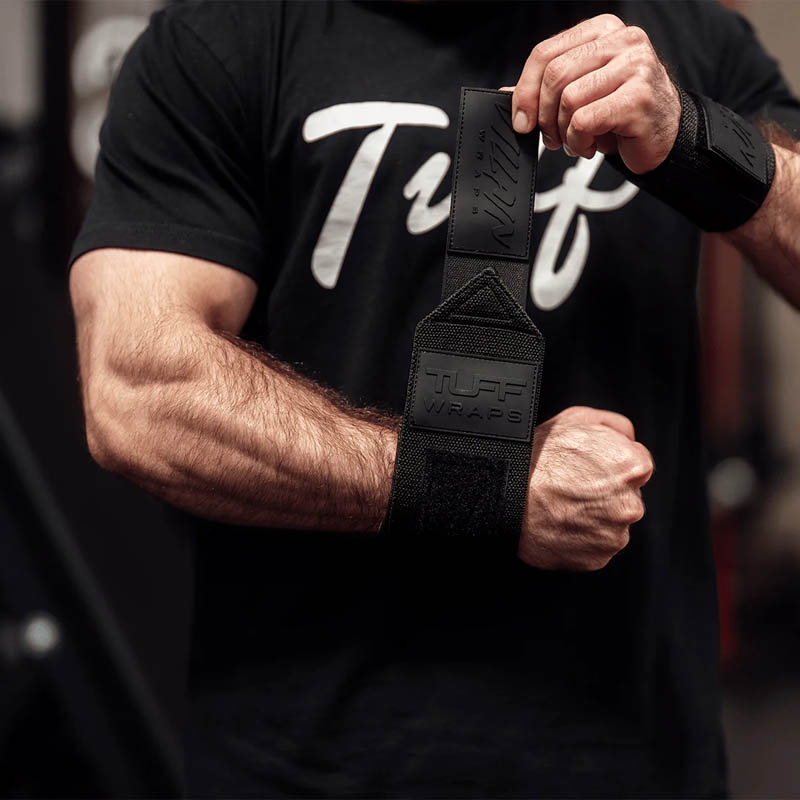
Support the position. Don’t substitute for it.
Wrist wraps are support tools. They can make the setup feel more secure, but they do not treat an injury or replace good bar placement.
Research does not show that wrist wraps automatically add strength, power, or endurance to a bench press. What trained lifters often value is the feeling of stability and the ability to reproduce the same wrist position from set to set. Read the bench press study on PubMed.
Why I built a wrap without a thumb loop
Here is my bias, stated plainly: I founded TuffWraps, and I sell the product described below. My wife and I began developing wrist wraps after seeing wrist complaints in practice and experiencing our own frustrations with the wraps available to us. TuffWraps launched in 2013.
Traditional thumb-loop wraps can work well when they are applied correctly. My preference for heavy pressing is a belt-loop tightening system because it lets the lifter anchor the wrap at the wrist, set the tension, and loosen it quickly between sets without relying on a thumb loop.
16-inch Villain Wrist Wraps
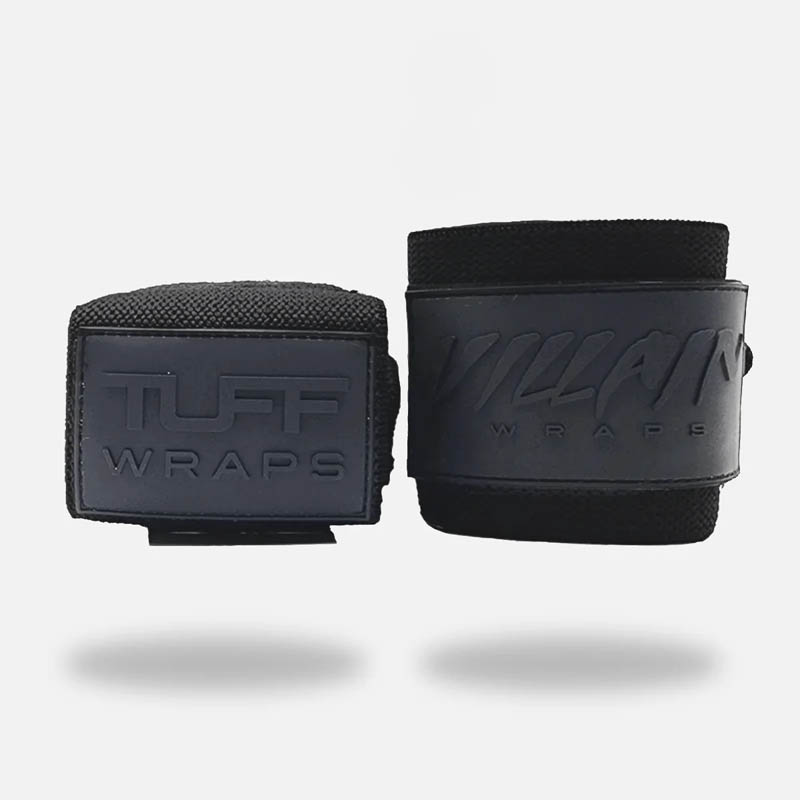
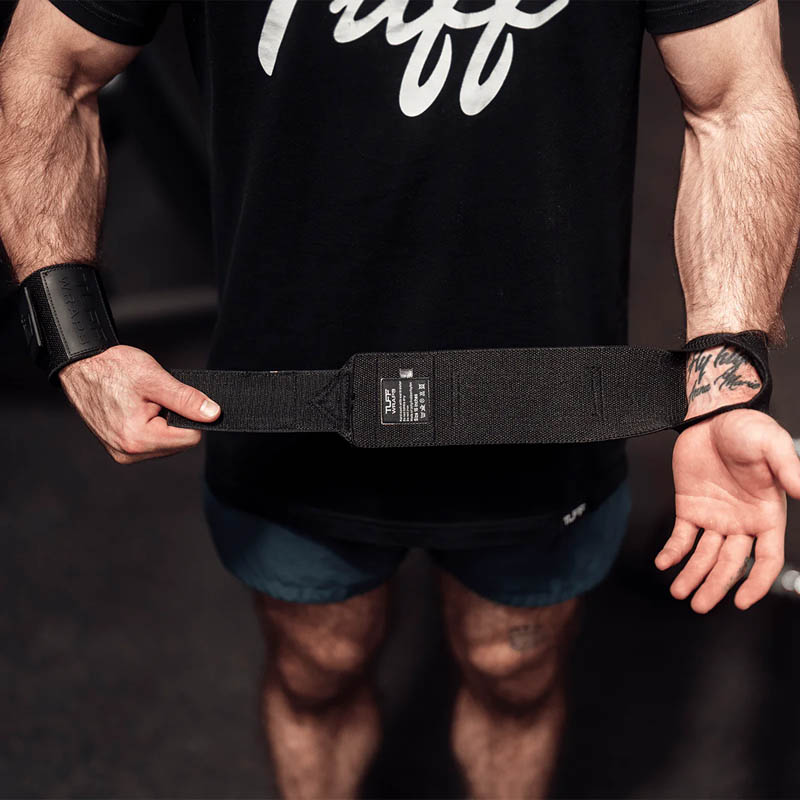
- No thumb loop. The Belt Loop Tightening System anchors around the wrist and lets you control the tension.
- Balanced everyday support. The regular 16-inch wrap is the simplest starting point for bench press, overhead work, and mixed strength training.
- Easy adjustment between sets. Loosen the wrap when you rest, then tighten it again before the next working set.
- Proven under serious weight. Villain wraps were worn by Julius Maddox during a world-record bench press.
- 30-day satisfaction guarantee. Try the fit and support with the protection of TuffWraps’ published return policy.
What verified buyers say
“Not only do they look completely bad ass but they are very comfortable and I can really lock them down.”Ryan M. · Verified buyer · Villain wrist wraps
“By far the easiest, most convenient and most supportive wraps you can buy!”Todd B. · Verified buyer · 16-inch Villain wrist wraps
“Great support and super easy to put on and adjust! 10/10.”Matt M. B. · Verified buyer · 16-inch Villain wrist wraps
Quick answers before your next press day
How tight should wrist wraps be?
Firm enough to resist unwanted wrist movement, but not so tight that your fingers become numb, pale, cold, or painful. Loosen them between sets and adjust the tension to the work you are doing.
Do I need wrist wraps for every set?
No. Many lifters leave them off for warm-ups and use them for working sets, high-volume pressing, or heavier attempts. They are optional support, not a requirement.
Should I choose 16, 24, or 30 inches?
Most lifters should start with 16-inch regular support. Choose a longer or STIFF wrap only when you specifically want more overlap, more restriction, and a more cast-like feel for heavy powerlifting-style work.
Will wrist wraps fix wrist pain?
No. Wrist wraps are not a medical treatment and cannot diagnose or repair an injury. They can help support wrist position during pressing. Persistent, worsening, traumatic, or unexplained pain deserves an in-person evaluation.
Visit TuffWraps Learn for practical answers about length, stiffness, fit, and training style.